 18+
18+
18+
18+
A beginner-friendly breakdown of how Tower Rush's 97% RTP and high volatility shape every round — and what that means for your bankroll in 2026.
Free demo — no real money. Mirrors the real game's behaviour. May be unavailable in some regions.
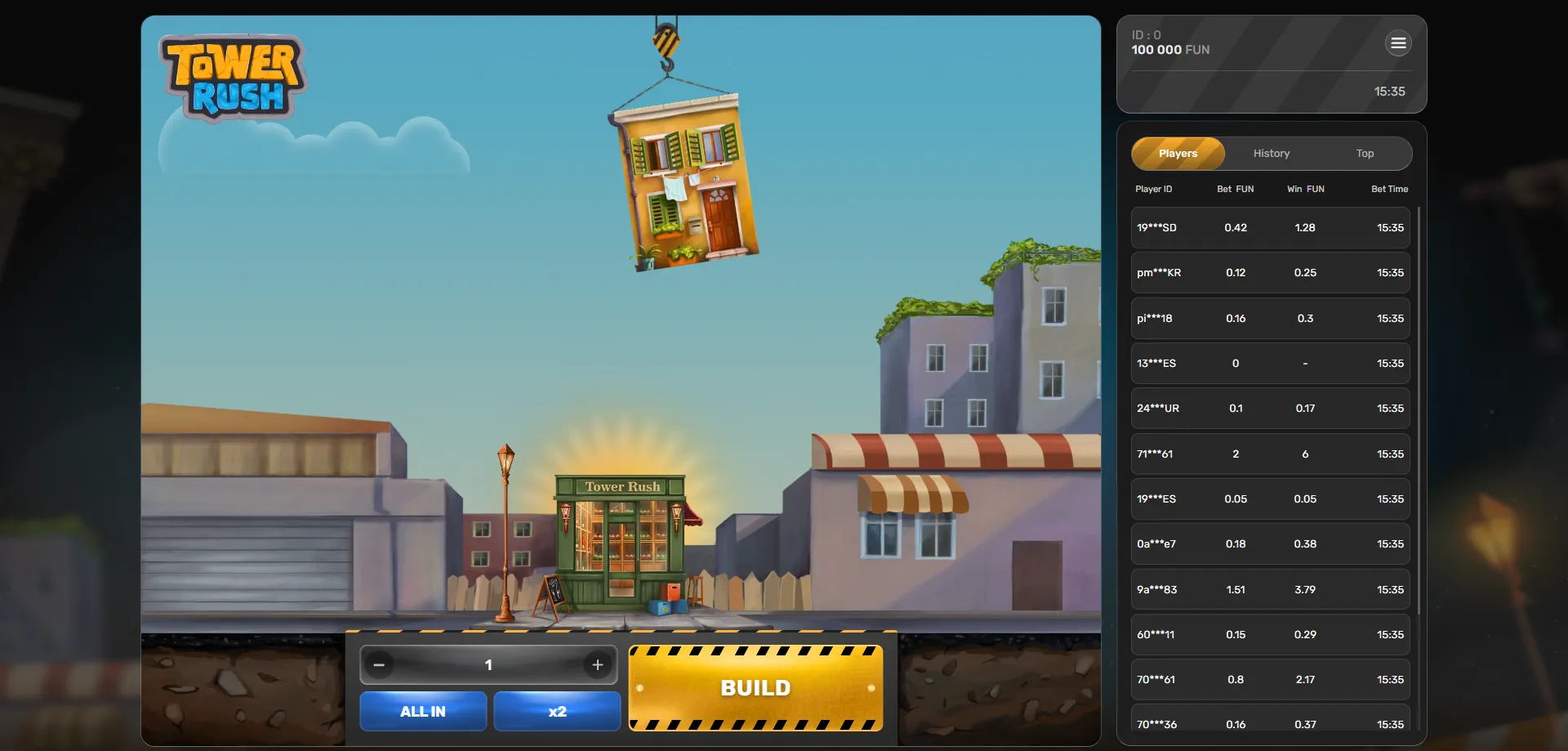
If you have never played a crash-format game before, the terms RTP and volatility can feel like jargon designed to confuse you. They are not. These two numbers tell you almost everything about how a game behaves over time — how often you are likely to see a return, and how large or small those returns tend to be. Once you understand them, you can walk into any Tower Rush session with realistic expectations instead of guesswork.
Tower Rush is a crash-style game developed by Galaxsys. Unlike traditional slot machines, it has no reels, no paylines, and no scatter symbols. Instead, a multiplier climbs in real time as a virtual tower builds upward. Your job is to cash out before the structure collapses. The game's Tower Rush RTP of approximately 97% and its high volatility profile sit at the heart of every decision you will make during a session.
RTP stands for Return to Player. It is a long-run theoretical percentage that describes how much of the total money wagered by all players is paid back in winnings over millions of rounds. Tower Rush publishes an RTP of approximately 97%, which is notably higher than most traditional slot machines — the industry average for slots typically hovers around 96%.
The key word is theoretical. The 97% figure is calculated over an enormous number of rounds — far more than any single player will ever complete in a lifetime. In any individual session of 50 or 100 rounds, you might return 120% of your stake or only 40%. Both outcomes fall entirely within the statistical reality of a 97% RTP game.
Volatility describes how the game distributes its payouts, not just whether it pays. Think of it as the beat of the game. A low-volatility game pays out frequently but in small amounts. A high-volatility game like Tower Rush pays out less often but with the potential for much larger multipliers when it does.
Tower Rush carries a high volatility rating. This means you should expect sessions where the tower collapses early several times in a row, followed by rounds where a generous multiplier builds up before you cash out. The rhythm is uneven. That unevenness is not a flaw — it is the design.
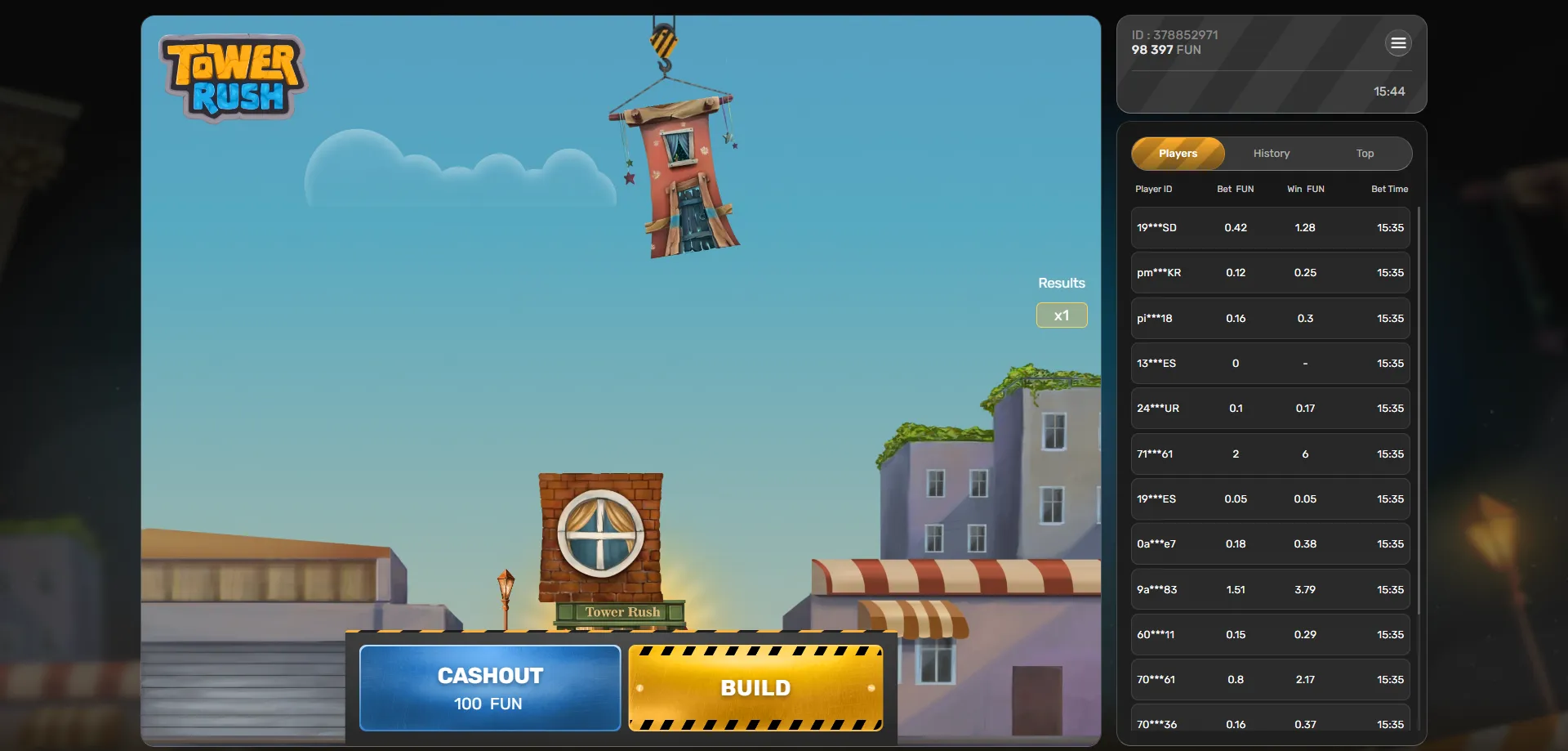
Many first-time players misread the RTP figure and end up disappointed. Understanding what it actually measures — and what it does not — will save you from unrealistic expectations and poor bankroll decisions.
The 97% RTP for Tower Rush is a theoretical, long-run average. It is computed by the game developer, Galaxsys, by running the game's algorithm through billions of simulated rounds. The result tells you that the game is designed to be fair and competitive over time. It does not tell you what will happen in your next 20 minutes of play.
In a single session, variance dominates. You could run through 30 rounds and experience a positive return well above 97%, or you could exit the session at a net loss. Both scenarios are mathematically normal for a high-volatility game. The RTP only "smooths out" as the number of rounds approaches the millions.
This is the most common misconception among new players. If you deposit ₹100 and play one round, you will not receive ₹97 regardless of the outcome. You will either receive your stake multiplied by the cashout multiplier, or you will lose your stake entirely if the tower crashes before you cash out.
The 97% figure only becomes meaningful across a very large sample of rounds. Over 10,000 rounds of ₹10 stakes (₹100,000 total wagered), the game's design targets a total payout of approximately ₹97,000 — but the distribution of those payouts across individual rounds is completely random. Some rounds pay nothing. Others pay significantly more than the stake. The average across all of them approaches 97%.
To put Tower Rush's high volatility in context, it helps to understand how all three volatility levels behave across a typical session. Each one suits a different type of player and a different bankroll strategy.
Low-volatility games pay out frequently, but the individual payouts tend to be small relative to the stake. If you are managing a tight budget and want your session to last as long as possible with steady, incremental returns, low-volatility titles are designed for that purpose. Your balance moves up and down in small increments. Losing streaks are short and recoverable.
Tower Rush does not belong in this category. If session longevity and frequent small wins are your priority, a low-volatility slot is a better match for your style.
Medium-volatility games sit between the two extremes. They pay out moderately often, with occasional above-average wins that make sessions feel rewarding without the extended dry spells of high-volatility titles. Many popular online slots occupy this middle ground. They work well for players who want meaningful wins without fully committing to the high-risk model.
This is Tower Rush's home. High volatility means you will experience stretches where the tower collapses early, round after round, before a session-turning multiplier appears. The gaps between significant wins can be long. However, when a high multiplier does land and you time your cashout correctly, the reward is proportionally larger than anything a low-volatility format would offer.
High volatility demands patience and a bankroll large enough to survive the dry spells. A common guideline for high-volatility crash games is to size individual round stakes at no more than 1% to 3% of your total session budget. If your session bankroll is ₹1,000, each round should use between ₹10 and ₹30. This gives you enough rounds to let the game's variance play out in your favour.
Before you start any Tower Rush session, it is worth answering three questions about yourself as a player. Your answers will shape how you use the cashout mechanics and how you manage stakes.
What is your session budget? Set a fixed amount you are comfortable losing entirely. Tower Rush's high volatility makes it possible to exhaust a small underfunded session before variance turns in your favour. A session budget of at least 50–100 round stakes is a reasonable starting point.
What is your goal for this session? If you want to extend your playing time and enjoy the experience, target lower cashout multipliers in the 1.5× to 2× range. These produce more frequent wins at smaller margins. If you are playing with a growth target in mind and can accept more frequent complete losses, then targeting multipliers above 5× is a viable higher-risk approach.
Does this game type suit your temperament? Tower Rush requires active timing decisions every round. Unlike a slot where you press spin and wait, here the pressure of deciding when to cash out is constant. If that pressure appeals to you, Tower Rush is an excellent match. If you find timing decisions stressful, a lower-volatility slot with automated outcomes may be a better fit.
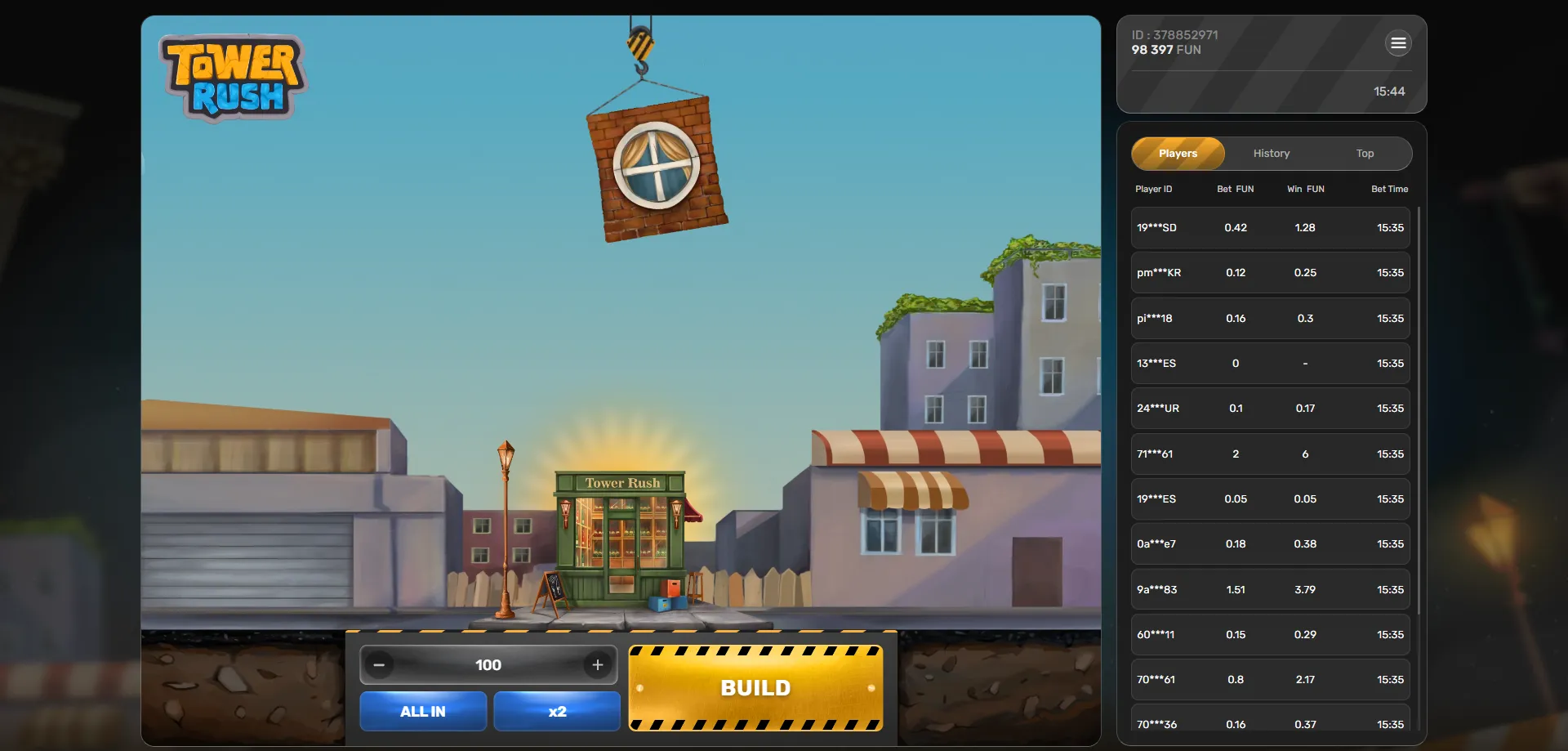
The table below summarises the key game specification data for Tower Rush itself, as published by Galaxsys and reported by operator platforms in 2026. Use it as a quick reference before starting a session.
| Specification | Detail |
|---|---|
| Provider | Galaxsys |
| Game Type | Crash / Multiplier |
| RTP | ~97% (operator-dependent) |
| Volatility | High |
| Minimum Bet | ₹10–₹50 (varies by casino) |
| Max Payout Reference | 50× (teaser; no fixed ceiling stated) |
| Demo Mode | Available |
| Provably Fair | Yes |
| Mobile Compatible | Android and iOS |
Galaxsys, the studio behind Tower Rush, consistently publishes RTPs at or above the 96%–97% range across its crash-format titles. This places the studio above many traditional slot providers whose average RTP falls between 94% and 96%. When browsing the full game library at any casino that carries the Galaxsys catalogue, you can generally expect competitive RTP figures across the provider's crash-game offerings.
If you are comparing Tower Rush against other titles at the same casino, the 97% RTP is a strong benchmark. Traditional slot machines in the same casino lobby frequently sit at 95% or below, particularly branded or jackpot titles. A 97% RTP means the house edge is approximately 3%, compared to a 5%–6% edge on lower-RTP slots.
RTP is only one variable. Progressive jackpot games, for example, may advertise a high headline RTP but deliver the vast majority of that return through rare jackpot events that most players will never hit. Similarly, crash games with uncapped multipliers can show impressive theoretical RTPs that only materialise if players consistently hold through extreme multipliers — a strategy that comes with a very high frequency of complete losses.
Tower Rush is transparent: its mechanics are simple, its provably fair system lets you verify each round's crash point independently, and its RTP is competitive. But no RTP figure, however high, eliminates the fundamental reality that high-volatility games require patience and a properly sized bankroll to experience their statistical promise.
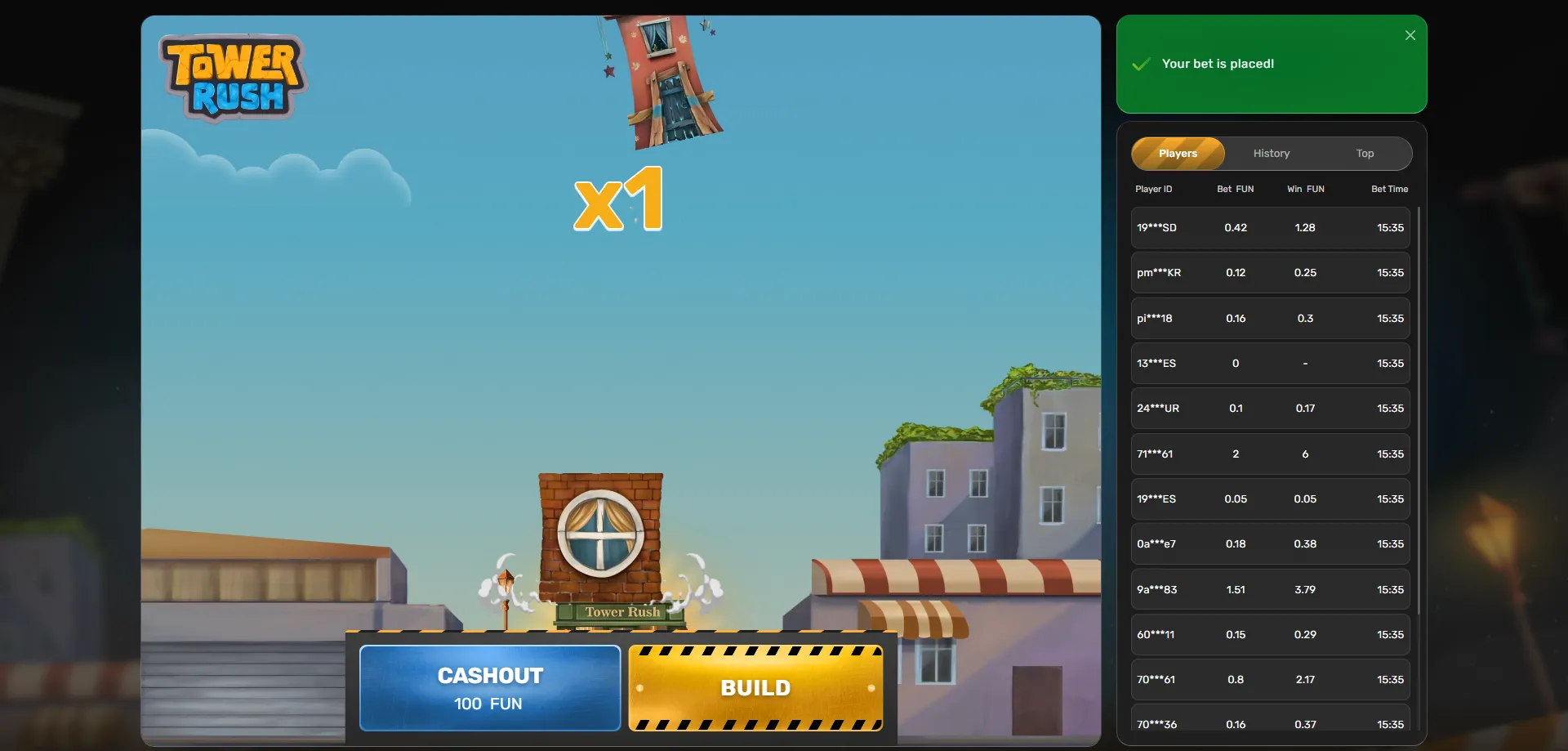
Tower Rush does not feature traditional bonus rounds triggered by scatter symbols or free spins in the classic slot-machine sense. However, it does include three unique bonus floors — the Frozen Floor, Temple Floor, and Triple Build — which are triggered randomly by the game's certified random number generator (RNG). You cannot purchase access to these features; they arrive on their own schedule.
The high volatility of Tower Rush applies to these bonus floors as well. Because the features are RNG-triggered with no fixed frequency, you may complete many consecutive sessions without encountering them. When they do appear, they modify the tower-building mechanic in ways that can extend a round or alter the risk profile — but they do not guarantee a large payout. Their value depends entirely on your cashout timing, exactly like any other round.
This is an important distinction from traditional slot bonus features. In a medium-volatility slot, free spins rounds typically arrive at a predictable frequency that helps offset base-game losses. In Tower Rush, the bonus floors are infrequent and their impact on your overall session return is less predictable. Plan your bankroll for the base game, and treat the bonus floors as an unexpected enhancement rather than a reliable source of recovery rounds.
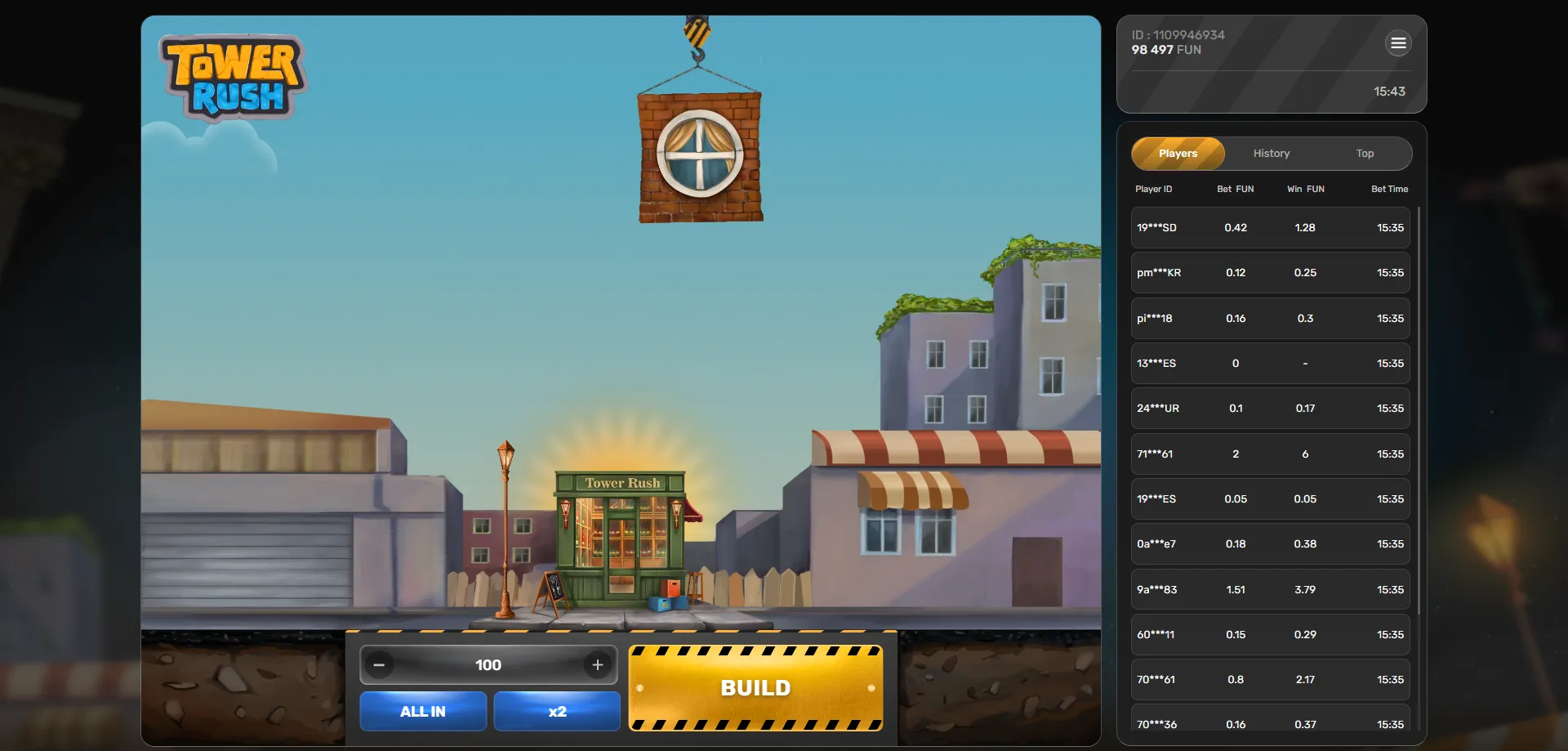
The Tower Rush demo mode replicates the full mechanics of the real-money game using virtual credits. The RNG behind the game operates identically whether you are playing for free or with real stakes. Galaxsys does not apply a separate RTP configuration to the demo version — the 97% theoretical return is built into the same algorithm that runs both modes.
What this means practically is that the demo is a genuinely useful tool. You can use it to test cashout threshold strategies, observe how the volatility feels across a session of 50–100 rounds, and develop a sense of the game's rhythm before risking real money. The demo will not tell you exactly what will happen in your real-money session — variance ensures that — but it gives you an accurate impression of the frequency and scale of the tower's collapses.
One important note: the provably fair verification system functions with real money play. In demo mode, the cryptographic seed verification that allows you to confirm crash points were predetermined is less relevant, since no real stakes are involved. If you want to explore the provably fair feature, do so after transitioning to real-money play on a licensed platform.
Before you launch a Tower Rush session, go through the following checklist. It takes less than two minutes and meaningfully reduces the chance of avoidable losses.
For a deeper understanding of the rules that govern each round, visit the Tower Rush Rules – How the Game Works page. If you want to develop more advanced approaches to timing your cashouts, the Tower Rush Strategy – Tips and Tricks to Win guide covers a range of tested methods. And if you are still deciding whether the platform is the right fit for you, the Tower Rush Review – Is It Legit? provides an independent assessment of the game and its hosting casinos.
Register a new account today and receive an exclusive match bonus on your first deposit. Don't miss your chance to conquer the Tower Rush leaderboard!
🚀 Play Tower Rush🔒 18+ · T&C Apply · Play Responsibly